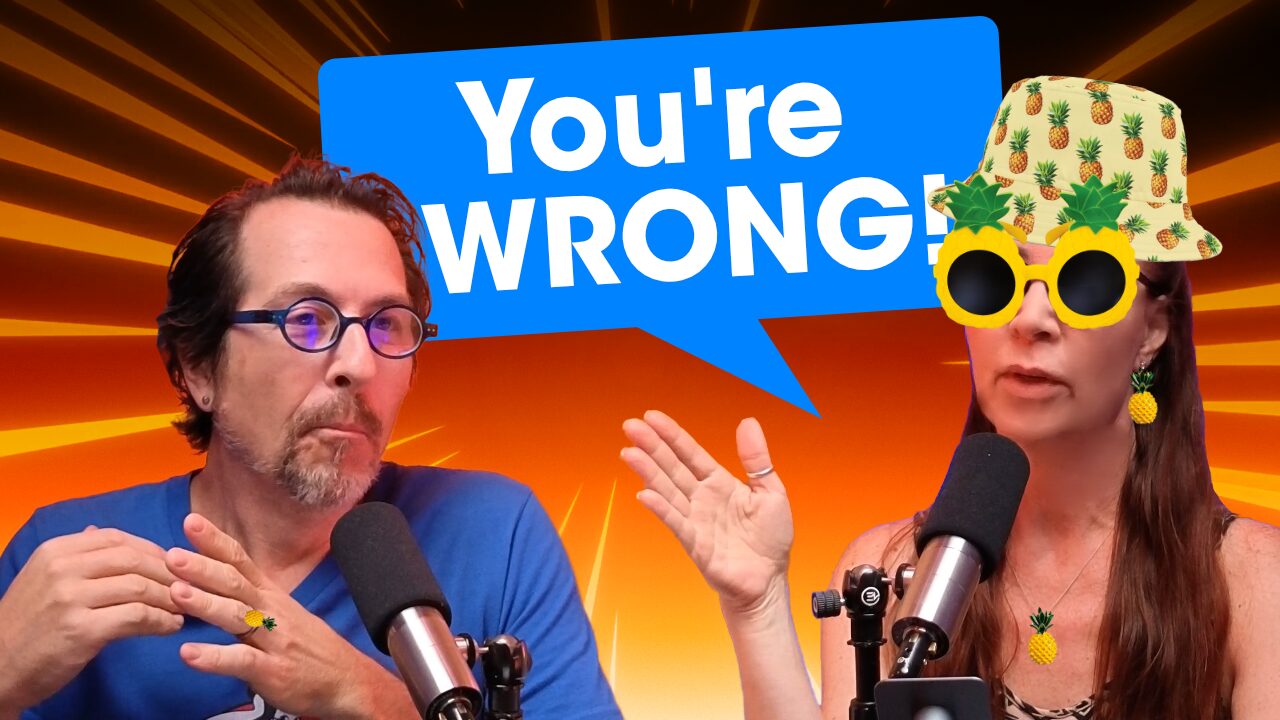
Is swinging just a lighthearted hobby… or a defining lifestyle choice? In this episode of our swinger lifestyle podcast, we dive into the hobby vs lifestyle debate that’s sparking conversations across the swinger community and beyond.
We explore why some couples embrace swinging as a fun, occasional activity — a playful part of ethical non‑monogamy — while others see it as a core relationship identity tied to trust, intimacy, and community. Along the way, we unpack the emotional depth, communication skills, and social connections that make the swinger lifestyle more than just a weekend pastime.
Whether you’re curious about open relationships, navigating consensual non‑monogamy, or simply interested in how language shapes modern relationship dynamics, this conversation will challenge your perspective.
What you’ll hear in this episode:
- Why some call swinging a “hobby” and the benefits of that framing
- Why others find the term dismissive or offensive
- How relationship labels influence identity and belonging
- The spectrum from casual hobby to committed lifestyle
- Why there’s no one‑size‑fits‑all answer
📌 Join the conversation — What term do you use, and why? Drop your thoughts in the comments.
🔔 Subscribe for more open, honest discussions on alternative lifestyle relationships, intimacy, and community.
3 Ways to get your question on our show:
RECORD it on our website at: https://swingeruniversity.com/contact/
EMAIL a recorded voice note to: swingeruniversity@gmail.com
CALL: (916) 538-0482 and leave a voicemail.
Our Links:
📺YouTube – Like to watch?
👉Join our vibrant community: https://swingeruniversity.com/community
🌶️Get extra episodes and exclusive content: https://www.patreon.com/SwingerUniversity
🛳️Book your vacation with us: http://SwingerVacation.net
- SwingLinks.club – Our Links
- PhoebeSwinger.com – All Phoebe’s Spicy 🌶️Links
- EdSwinger.com – All Ed’s Spicy 🌶️Links
- Our Website – Leave us a message, articles, and sexy products
* We get a commission if you decide to make a purchase through our links, at no cost to you.
Transcript
[00:02] [Ed] We’re tackling a high-fucking topic in the Swinger community.
Is it a hobby or a lifestyle?
The debate.
Some people proudly call swinging a hobby, while others are deeply offended by the term
and you know who you are, we’re speaking directly to you.
Our goal will explore both sides of this argument to understand why the language matters and
what it says about our relationships.
[00:29] [Unknown] Alright, let’s talk about it.
[00:35] [Ed] The hobby argument.
[00:37] [Unknown] We used that term a lot and it worked for us.
[00:42] [Phoebe] I mean, we were many, many years, we used it, you know, I mean, we were dabbling.
Yeah.
And we were raising kids and we had other hobbies and we had very limited time.
So it was, it fit in like a hobby because we didn’t have time to, quote, live the lifestyle,
which we didn’t even really know what that meant and we just knew that it meant all
consuming.
[01:10] [Unknown] Yeah.
[01:12] [Ed] And we didn’t know that other people called it a hobby either.
That was just what we came up with when we first started.
And I think part of it comes down to this definition of like what is a hobby and it’s
[01:25] [Unknown] a quote thing you do, right?
[01:29] [Phoebe] Is that what it says?
A thing you do.
[01:32] [Ed] Yeah.
It’s a thing you do.
Like anything you do, like collecting baseball cards or polishing rocks or racing, you
know, automobiles or motorcycles or, you know, whatever.
And really framing swinging as a fun activity for enjoyment, just like golf or painting,
right?
It’s fun.
You know, and you’ve got some tools that go along with it.
[01:56] [Unknown] Or is this a little go-bag with condoms and lube in it?
[02:03] [Phoebe] Yes.
And you can get the same type of adrenaline rush as well, right?
From this hobby, which is what keeps people coming back.
[02:12] [Unknown] Exactly.
Yeah.
[02:15] [Ed] The other thing that’s interesting about this is that it really is kind of like a separation
from your identity.
Like you identify as whoever you are and what you do on a daily basis.
I think too many people as an example identify with what their job is.
Like, oh, that’s my identity.
That’s who I am.
I’m an engineer.
I’m an accountant or whatever.
[02:38] [Unknown] Right.
[02:39] [Ed] And that really isn’t who you are that isn’t your identity.
But to associate a fun activity that you do once a month or once a quarter or once
a year when you go to desire as your quote, life style, as your identity, I can see that
being a very big stretch for a lot of people.
We certainly didn’t identify that way.
Like it wasn’t all consuming.
It wasn’t a quote, lifestyle at the time.
And I think part of this is that with this separation from your identity, it kind of
gives you a little bit of privacy too.
[03:18] [Phoebe] Hmm.
That’s true.
Yeah.
A place to retreat from that hobby when things get heated or overwhelming, you know,
you and your partner aren’t on the same page.
You need time to pull back and reassess or have some communication.
[03:40] [Ed] Yeah.
And part of that whole hobby thing too is you can kind of put it down when you don’t
want to do it.
So to your point, we went through periods of time where we were like, we need a break.
We just need to step away from it a little bit.
[03:53] [Unknown] And if it was your lifestyle, we’ll get into lifestyle in a little bit.
[03:58] [Ed] But right.
There’s also this kind of fun, playful connotation to it.
[04:04] [Phoebe] You know, hobby sounds less serious, it’s, it’s, it takes some of the pressure and that
[04:09] [Ed] like emotional weight, you’re like, oh, I’m, I’m committing to a lifestyle.
[04:13] [Phoebe] I was like, well, no, it’s more like a hobby.
[04:15] [Ed] You know, we just do it every once in a while with our friends.
It’s kind of fun.
[04:18] [Phoebe] It’s light.
It’s fun.
Yes.
[04:21] [Unknown] I agree.
[04:23] [Ed] Definitely.
And I think this aspect of the light fun, you can set it aside when you need to.
Nature is why a lot of couples really identify with that hobby phrase that, that just makes
[04:41] [Unknown] the most sense for them because they don’t feel as entrenched in it, in pride in it.
Right.
[04:52] [Ed] Now let’s do, let’s do a con on, on hobby.
And I think, and this will kind of segue us into the, the whole lifestyle argument.
And I think because there is such a personal nature to it, because people are emotionally
invested with like their sexuality and their partner and their marriages on the line that
I think this concept of a hobby being too light and fluffy that they’re not taking it
seriously enough.
[05:29] [Guest] Yeah, that, that is a, that is a really good point.
[05:34] [Unknown] Yeah.
I don’t know what else to say.
[05:38] [Phoebe] That was a very good point.
[05:41] [Guest] Nailed it, my drop.
[05:42] [Unknown] Yep.
Done.
[05:44] [Ed] So let’s, let’s do the converse, right?
Let’s talk about the, the whole lifestyle argument and why hobby is offensive because we’ve
[05:56] [Unknown] got some more details down in here.
[05:59] [Phoebe] Okay.
Keep going.
You’re doing a good job.
Yeah.
[06:03] [Unknown] Hannah, the rain’s over to Ed this time.
[06:06] [Ed] I think the switch to lifestyle and we can kind of, we can talk about this a little bit
personally was that lifestyle really implies this change in how couples communicate
[06:20] [Unknown] and build trust and, and how they live and it’s not just a weekend activity.
[06:27] [Phoebe] Right, becomes, well, it starts, did, did, let me rephrase that.
Your vanilla friends start to kind of fade away into the background.
Maybe they, they don’t, but we’ve heard that they tend to fade away into the background
and you gain more lifestyle friends.
The other thing that happens is as you start to become more comfortable in the lifestyle,
some couples like to come out and tell their family and tell their friends and in that
disclosure, the vanilla friends will fall away because they don’t agree and they can’t
abide by that.
[07:17] [Unknown] So they’re like, see a nice know-in-ya, but that’s okay because they have their lifestyle
friends to, to fall on and support them.
[07:26] [Ed] Yeah.
It’s interesting that you mentioned that because I had someone reach out to us and, and
sent me a text message, may have been in telegram.
Anyway, and he went through a lot of detail about how they don’t disclose anymore to their,
[07:45] [Unknown] vanilla friends, that their lifestyle, did, did, did they use to disclose?
[07:50] [Ed] They did and they had a, they had a number of friends who once they, once the curtain
was pulled back, really freaked out and just cut off contact.
No, we’ve, we’ve heard the opposite from other people that were like, wow, they don’t
get it.
[08:07] [Unknown] It’s not for them, but they’re like, you do you.
[08:11] [Ed] Like that sounds, that sounds like you’re having your best life.
[08:15] [Phoebe] We’ve been to parties where they blended their vanilla and their lifestyle friends and
their vanilla friends know about their lifestyle friends, but they don’t care.
They’re just lifestyle adjacent, they’re, they’re accepting of the activity, but they know
it’s not for them and everyone else knows that they’re vanilla, but they, we can all co-exist
at the same party.
Right.
Fabulous.
I was really surprised at this blending of the two.
[08:46] [Ed] Yeah.
Yeah.
We, we didn’t go to that party.
We went to the other party, which was like all lifestyle people because then the shenanigans
started happening.
But yes, that, that particular group had those two groups very well blended.
[09:03] [Unknown] Yeah.
[09:09] [Ed] The emotional depth.
So part of this whole like opening up and, and changing your communication and maybe
even changing your circle of friends for, for many, this lifestyle is a source of community.
And this is the big one, social identity.
So it’s kind of like its own sub culture.
There’s, there’s a whole different set of conversations that you have about it.
[09:36] [Unknown] There’s a whole different like I would even say seasons for things like you know that
[09:44] [Ed] in March or April and November, you’re going to go on a lifestyle cruise.
So like your whole life kind of starts to revolve around certain key things, certain key
events.
Like it’s, you know your friends are going, so you start going to, it’s this, it’s this
whole thing.
[10:07] [Unknown] Yeah.
[10:08] [Phoebe] You start to prepare a month or two in advance, shopping for your items.
The chat groups start to get really busy, you start sharing a lot of photos and having
conversations with people trying to get to know them.
[10:21] [Unknown] So it becomes more consuming.
[10:24] [Ed] Yeah.
[10:25] [Unknown] Yeah.
[10:26] [Phoebe] And so you’re starting to pick your hobby back up.
Yeah.
And you do it for, yeah, it’s usually right around a big event like a desire or, or any
[10:38] [Unknown] kind of adult resort or cruise.
[10:41] [Phoebe] It’s usually about two months ahead of time where things really start to ramp up.
[10:45] [Ed] Yeah.
And some of that’s just being, being prepared to go to an event.
But some of it too is that, that whole anticipation and the chatter amongst friends and you, you
know, maybe you’ve got a new social media group that you’re involved in.
You know, there’s a telegram group where you’re starting to chat with the people who are
going to be on the cruise.
So there’s this like culture shift, if you will, where you start hanging out with those
[11:14] [Unknown] people more often.
[11:18] [Ed] And I think this is where the big kind of twist your panties and a knot comes in with lifestyle
versus hobby.
And it’s really kind of minimizing that significance.
And I kind of mentioned it before where it’s calling it a hobby feels dismissive.
It kind of minimizes this hard work and all the emotional labor that couples invest in
order to a get into the lifestyle and be maintaining their relationship despite the lifestyle, maybe
[11:53] [Unknown] throwing obstacles in their way.
[12:01] [Ed] We need your help so that your community, the very one you love and have so much fun with
can also find our show.
Here’s a really easy way to do that.
If you’re listening on Apple Podcasts or Spotify, hit that follow button and leave
us a rating.
If you’re watching on YouTube, subscribe and turn on notifications.
We can’t emphasize enough how much this helps the Swinger community.
And it truly is up to you to make that happen.
It makes a massive difference in whether new listeners can even find us.
And here’s the thing.
When someone searches Swinger Podcast, the algorithm doesn’t care how good our content
is or how long we’ve been around.
It only cares about ratings and reviews.
We’d appreciate it and your community will really appreciate it.
[12:56] [Unknown] Thanks for listening.
Did we talk about the emotional depth part, jealousy and security?
Let’s talk about it.
[13:09] [Phoebe] So I think when you’re viewing it as a hobby, it’s not that you’re not going to encounter
emotions and insecurities.
But when you’re in a lifestyle, there seem to be less of those hiccups because you’ve
been to enough events, depending on how active you are.
So I would say if you’re not that active, you need to go to one adult event a year and
you have conversations with your partner for a month, pretty intensely about that or
two months, and then the other 10 months of the year you don’t, your progress, so to
speak, relative to each couple and how they process things is going to be a little different
if you’re going to a meet and greet every week and then every month, you’re at a party
and then every quarter, you’re on a cruise or you’re at a resort.
So after a while, you start to get to feel like, oh yeah, I know how this works.
I’ve been to this event before or I’ve been to something similar.
[14:28] [Unknown] This is how it’s going to go down, so that sense of ease starts to set in.
Yeah, and I think we definitely experienced that from the very beginning that sense of, we
[14:44] [Ed] don’t know who’s going to be at the party, we don’t know what the situation’s going to be like,
we’re not sure how that dynamic is going to go or how we’re going to feel before, and I know
you’re the planner and you wanted to know how that evening was going to go before we even got
there. And I think for sure, as we got into it longer, it became much easier for us to not worry
so much about it because it felt familiar. It was comfortable. And I think that that lifestyle
aspect where you kind of live it day to day or at least on a frequent enough basis, where
it’s not uncomfortable. You don’t have kind of this like start stop cycle, where you have to kind
of like get the engine warmed up again and feel where you were before. And those big gaps
when you don’t do it regularly, they can be pretty jarring. I mean, it’s pretty rough going,
God, you know, what do we do? What do we say? Who’s going to be there because the people who you
were used to being there all the time? They may not be at that party anymore that the community
[15:58] [Unknown] may have completely changed. Yep, exactly. Next. All right. So there’s, I’m going to just say it.
[16:13] [Ed] I don’t think either camp is right or wrong. I think they’re both right. And I think like everything
in sexuality and especially in the lifestyle that it’s a spectrum. You’re not all in and you’re
not just a hobbyist. It just depends on where you are. And I even think from a hobby standpoint,
I’m going to play a devil’s advocate argument with the hobby for a second. Everybody knows somebody
who has a hobby that’s so all consuming that they wear the gear. Their whole house is decorated
that way. Every weekend is with those friends to do that hobby. Kind of like sports.
Exactly like sports. I used the example when we were out on our walk about the RC car hobby.
Those guys have conventions and races and all their buddies are building cars and they’re
like in chat groups talking about it and they’ve got magazines, subscriptions about it and they’re
[17:22] [Unknown] watching TV. They’re watching the national championship. All of that. I mean, you could even think of
[17:29] [Ed] like RVing as it’s a hobby, but it’s also a lifestyle because you’ve invested in this thing and
so you got to go do it all the time, boating. I mean, I can’t name very many hobbies that are not
all consuming and pretty much suck up all of your money and your free time.
[17:48] [Phoebe] Well, especially if they’re based around a community and some and some hobbies are,
even knitting groups. They get together once a month, once a quarter. That’s a pretty solo
activity. Yeah, it’s very individualistic, but then there’s that social component.
[18:06] [Unknown] Right. So it’s really interesting. I think my fear of calling it a lifestyle was that I didn’t
[18:20] [Phoebe] want it to consume me and I thought it was the kind of this gateway into polyamory and I knew
[18:27] [Unknown] that wasn’t for me. Now, from this perspective, not knowing anything about polyamory other than
[18:36] [Phoebe] what I’ve read and the people I’ve talked to, I don’t have any direct experience with it,
that that would feel 100% more like a lifestyle to me because you’re living it every day.
Right. With somebody else living in your house, you’re living as a triad or a quad or whatever.
Sure. Sure. So to me, that’s that’s more lifestyle, but but you can be lifestyle as a as a
swinger. You just most of most of your time and the activities you do are with
lifestyle friends and their vacations are lifestyle. Yeah. Don’t go on any other vacations.
[19:20] [Ed] Maybe some do, but some don’t. Yeah. Yeah. And I think that there’s a fair number of people who
[19:28] [Unknown] who kind of qualify it as a lifestyle because it’s the it’s the first group that they think of when
[19:37] [Ed] they think about what they want to do for for fun. Yeah. And I think that that’s the the whole thing
where you kind of have this mindset shift where that becomes kind of this predefined thought process
about almost everything. Oh, well, we can’t we can’t go do x, y, and z with the vanilla people
[19:59] [Phoebe] because we’ve got that thing with I wonder if it’s the community. I wonder if if the community is
really what makes it the lifestyle because as a hobbyist, if you’re not doing things with the
community, you are kind of isolated, you dabble, you do your thing. But then as you start to gain
more connections and friendships, then it becomes more of this community lifestyle people care for you.
They’re there on your doorstep bringing you meals, if you know, your parents, someone in your
[20:32] [Unknown] family dies, right? They’re there. They’re real people. And but then I would also say you could fall
[20:40] [Phoebe] out of the lifestyle to if the if you’re if the community dies off. Right. Maybe maybe that local
promoter in your areas and bringing that community together, or you’re not very good at bringing
[20:54] [Unknown] the community, you know, the communities are like like big families. You always have the
[20:59] [Phoebe] matriarch that brings everyone together for the Christmas and, you know, Halloween and Thanksgiving
and whatnot. So once that person’s gone, no one takes up the torch. How are you supposed to get
together? So that’s kind of what happened in our in our area and our community got very fractured.
So we feel like there really isn’t a lifestyle. We we feel a little out of it. Right. We feel
more like hobbyists now. So we went from hobby to lifestyle and now we’re kind of back to hobby.
[21:31] [Ed] And I think it’s because of the community. Yeah. And I would say the one exception for us,
of course, is that we do the podcast. So we’re kind of living it and breathing it day in and day out.
Very true. All the time. So if anything, the lifestyle has just changed for us a little bit.
Right. And that we don’t we don’t get to play as much as we used to because there’s not as many
events as there used to be. Although, you know, we’re starting to get connected back with that. So
[22:00] [Phoebe] we’ll see. And some more promoters are starting to pop up in our areas. So I’m really excited about
[22:05] [Ed] that. Yes. Yes. So stay tuned. We’ve got we’ve got a new venue that that has opened
[22:12] [Phoebe] recently or is opening really soon. And so we will have more news about that. So the other thing
[22:24] [Ed] I think that really hangs people up. And I think this is this is key for almost every single
[22:30] [Unknown] phrase in the lifestyle. And that is the language of it, the terminology. It trips everybody up.
[22:40] [Ed] So hobby means one thing to one person and lifestyle means something else to the same person. And I
think, you know, you can say soft swap to one couple or full swap to another. And that may mean
something completely different to them. Like there’s a classic definition for all of these things.
Yeah. But how people kind of interpret that almost becomes a dialect, a sub dialect of the bigger
language. Yeah. And I think that’s what most people get hung up on with the word hobby. And why
[23:14] [Phoebe] it becomes so controversial. I’ve had people say, Oh, well, you’re just don’t take it seriously
then. If you’re calling it a hobby, you’re just not serious about the community or the lifestyle
[23:29] [Unknown] or whatever. Right. Like, what does that mean? And you know, the counterargument to that is,
[23:38] [Ed] how do you not take it a little serious? I mean, you’re you’re having sex with other people. So
[23:44] [Phoebe] like, who cares? Who really cares? How I define it? Right. That too. Like you said, to your point,
people define soft and full. And all the other definitions a little differently, which is why
having a better conversation about what people are into, because there’s varying degrees of soft.
[24:04] [Ed] Right. So it’s a lot of stuff on the table. Yeah. For sure. For sure.
So in conclusion, there’s no single answer for all of this. It’s not a right term or a wrong term.
The most important thing is to understand the different perspectives. And the use the language
[24:27] [Unknown] that feels right for you and your partner. And and I guess the final thought that I have on
[24:34] [Ed] this whole thing is, does the label truly matter? Or is it just semantics? What term do you use?
And why? We’d love to hear about it in the comments, whether you’ve ever used the word
hobby or you’ve always thought of yourselves as quote, lifestylers. We use the term kind of
interchangeably. And we definitely still refer to it as a hobby for some people because
it’s kind of a fun thing to do on weekends with your friends. Yeah. And it’s funny how it’s changed.
[25:09] [Phoebe] Like I said before over the years, when I’m when I’m when I’m more active, when there’s more parties
to go to in the communities, more active, I feel like I’m more in the lifestyle. Right. Right.
But that’s just that’s just me. That’s how I personally relate to it.
[25:29] [Unknown] So what did you think? Good topic. Interesting fun. People have a good time.
[25:35] [Ed] Yeah, it was a good topic. Yeah. I liked it. It was fun. It was fun. I had fun. Cool. Cool.
Well, folks, thank you for joining us and talking about hobby versus lifestyle.
[25:50] [Unknown] If you want to reach out to us, please visit our website at SwingerUniversity.com.
[25:57] [Ed] We have a hotline that you can call 916-538-0482. And you can leave us messages, comments,
whatever. And you can even be on the show if you leave us something that you want us to to put
in the show. And if you want to be more anonymous, there’s a little message button on our website
where you can push it and you can leave us a 90 second message and it’s completely anonymous.
So no phone number attached to it or anything. And last but not least, thank you for tuning in.
Thank you for sharing this time with us. And we’ll see you guys next time.
[26:38] [Unknown] Bye, everyone. Oh, one last thing before you go.
[27:01] [Ed] If this episode helped you in any way, the single best thing you can do to support the show is
leaving a rating and review. It takes 60 seconds and helps new people find us when they’re
searching for relationship education. And we’ve made it easy. Visit SwingerUniversity.com
forward slash review. All the instructions are there. Thank you for being part of this community.
We’ll see you again soon.