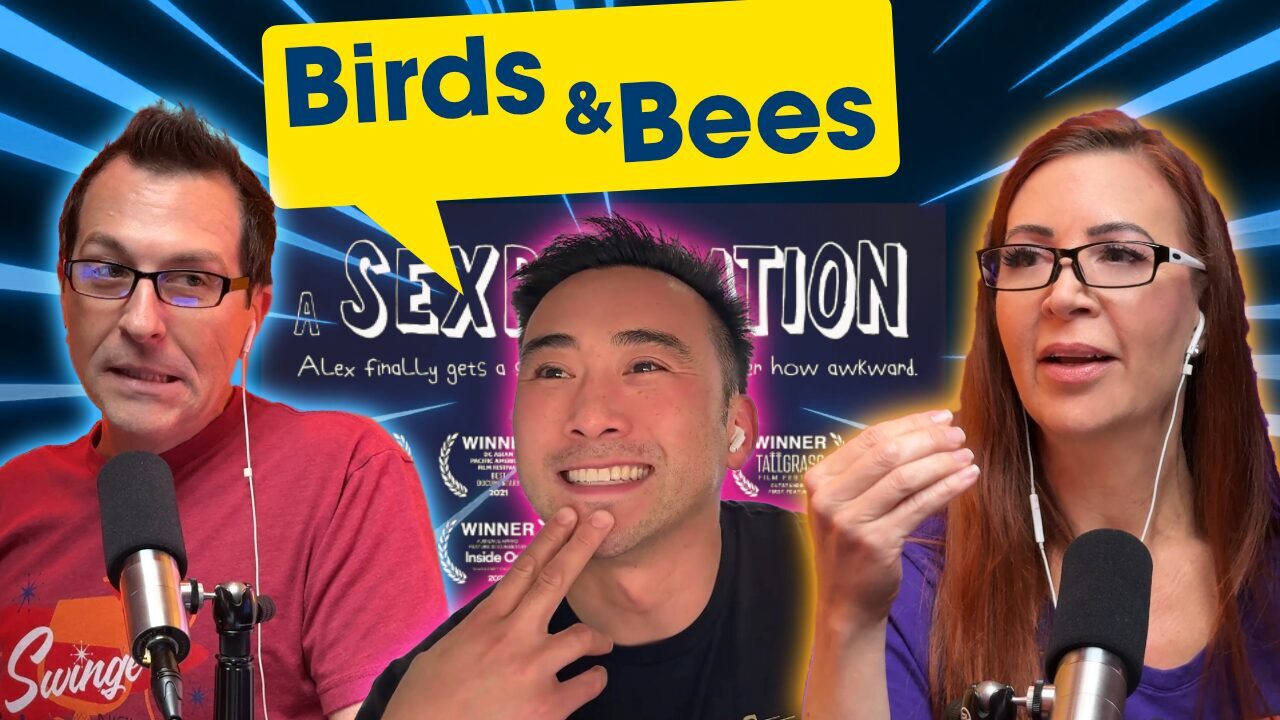
In this episode of Swinger University, we sit down with Alex Liu, the writer, director, and star of A Sexplanation, a groundbreaking documentary that dives into sexual stigma, shame, and the lack of comprehensive sex education. Alex shares his journey from molecular biology to filmmaking, tackling taboos around sex, drugs, and identity. We explore how better conversations about consent, sexuality, and pleasure can reshape our understanding of intimacy.
🔹 Topics Covered:
✅ The cultural and societal shame around sex
✅ How scientific research shaped Alex’s understanding of sexuality
✅ The challenges of making A Sexplanation and facing criticism
✅ The parallels between LGBTQ+ experiences and the ethical non-monogamy community
✅ How open communication and consent lead to better relationships
🔥 Watch Now to Challenge Everything You Thought About Sex! 🔥
👉Join our vibrant community: https://swingeruniversity.com/community
🌶️Get extra episodes and exclusive content: https://www.patreon.com/SwingerUniversity
🛳️Book your vacation with us: http://SwingerVacation.net
3 Ways to get your question on our show:
- RECORD it on our website at: https://swingeruniversity.com/contact/
- EMAIL a recorded voice note to: swingeruniversity@gmail.com
- CALL: (916) 538-0482 and leave a voicemail.
📢Engage With Us: https://swingeruniversity.com/
🔗 Check out all our social media links: http://swinglinks.club/
☝️Remember to: like, subscribe, and comment and share your thoughts!
✏️These pages may contain affiliate links.
Episode Links:
A Sexplanation Trailer: https://tr.ee/y1QeX_KNhM
A Sexplanation Film: https://tr.ee/muGR_SxEep
Alex’s Links: https://linktr.ee/asexplanation
Hera Productions: https://www.herraproductions.com/about
A Sexplanation Wiki: https://en.wikipedia.org/wiki/A_Sexplanation
Transcript
[00:00] [Ed] Welcome to Swinger University, I’m Ed.
[00:02] [Guest] And I’m Phoebe.
[00:03] [Ed] Today we are super excited to be interviewing Alex Lue,
writer, director, narrator, and protagonist in a documentary called A Sex Plenation.
Exploring issues concerning sexual stigma, shame, pleasure, and pride in the context of debates over comprehensive sex education.
And he had four film festival nominations, and one, nine film festivals from 2021 to 2022.
[00:33] [Guest] Alex’s work explores taboo topics like sex and drugs to deepen our understanding of science, morality, and living meaningfully.
[00:45] [Unknown] A former health reporter for CNN, Nova Science Now, an NPR, his debut feature documentary, A Sex Plenation,
[00:53] [Guest] was named a New York Times Critics Pick, and won the 2023 American Association of Sexuality Educators.
Counselors and therapists, audio, visual, award, and LGBTQ plus journalist excellence in documentary award.
[01:09] [Ed] For those who have not watched this documentary, shame on you.
Although we’re talking about not shaming people, but absolutely go see this.
It’s a comedic and universal search for love, connection, and self-acceptance.
Addresses sex education and lack thereof, and shame about sex, and how we identify.
There’s interviews with psychologists, scientists, therapists, and a Jesuit priest through them all in there.
It sounds like a joke actually, a therapist, a scientist, and a Jesuit priest walking to a bar.
The overarching theme of trying to get people to critically think about sexuality and that sex is fun,
pleasurable, and it’s okay to talk about it.
[01:55] [Guest] To us, you are a champion for fighting sexual stigma, shame, and helping people embrace pleasure.
The more people like you that can bring these topics to light is a win for everyone.
We try to do the same for Swinger community by addressing these same issues
and your documentary deeply resonated with us, so thank you so much for being here.
[02:18] [Phoebe] Well, thank you for having me. That was amazing introduction. I really appreciate the time.
[02:23] [Guest] Yes. So tell us a little bit about yourself and your background and how you went to go from
studying molecular biology, to a reporter and filmmaker.
[02:35] [Phoebe] So I think that kind of through line of my life has really been trying to understand and grapple with my sexuality.
Identify as a gay man, and I think for a group in the 1980s, 2000s, and the pictures there,
or if I heard about gay people would be through the lens of HIV-AIDS, it’s hard to believe
when you think about how taboo being gay wasn’t it, because it’s changed so rapidly.
But there was nothing out there. I was just barely keeping my head around water, trying to understand
my same sex attraction. The one place that definitely the church was not helpful,
it was harmful. And the one place that I found that actually started to help me make sense of
things were the scientists, specifically the biological sciences. So I spent a lot of time kind of
trying to figure this out and it became clear like, okay, like I feel much better because I realized
like not only have I never thought critically about any of these morals, ideas, taboos,
but most of the people around me have never thought about it. And as you dig more and more,
you realize that almost every taboo topic, sex drugs, everything, so much of good information has
been kept from us for various reasons. And the more more I understood that the kind of
angry I got. And I think that I’ve just reached a point where I was like, well, I’m complaining all
the time about why isn’t there good sex education out there? Why isn’t there a good drug education
out there? To the point where I was like, well, if no one else is doing it, let’s see what I can do.
And so I started this path of science reporting, health reporting, starting putting stuff on YouTube
and it led me to making this documentary, to making this explanation. That’s fantastic. It’s funny
[04:07] [Ed] as you were describing that we had a similar feeling when we started talking about doing the podcast
where it was like, yeah, there’s lots of podcasts out there that talk about swingers and
swinger parties and how cool it was to have sex with multiple people and it’s the hip thing and
everybody should do it. And so much of it didn’t resonate with us. And it wasn’t from kind of like
[04:29] [Unknown] an education standpoint. Sure, it was informative, but it wasn’t really digging into some of these
deeper topics. And so yeah, like if nobody else is going to do it, I guess we’re going to start
[04:41] [Phoebe] doing it. That’s great. Yeah, I fully feel like that that’s the beauty. I mean, the issues with
with media today, but that’s one of the beautiful parts is that you can kind of do yourself now.
[04:51] [Unknown] Yeah, yeah. And then what are some of the challenges that you face when you’re working on this film?
[04:58] [Guest] Because you you really had to switch gears. I mean, I’m sure there was a massive learning curve.
[05:03] [Phoebe] Oh, yeah, yeah. I mean, I was trained in straight journalism, right, which is kind of dying right
now, which which is be as objective as possible, be as unbiased as possible. It’s a straight,
factual story. You know, don’t don’t put yourself in it. And I think that’s good advice for most
reporting, you know. And whenever I would pitch stories around sex education, drug education,
I think if I were to pitch them now, they would probably be taken by a lot of these publications.
But back then, they were like, we don’t want we don’t want to talk about these things. And so
I found myself just increasingly frustrated. And I think for a good reason, you know, I was
probably more on the activist side of things than the journalism side of things the way I was pitching
these stories. And so I was like, well, I’m just going to do it myself, you know, and and I think
the biggest challenge for me in doing all this was really trying to process why I was doing this.
Because the initial instinct was to come to a place of preachingness of anger. I’m going to tell
the world why they’re wrong and why I’m right. Right. Which is not a pleasurable experience to watch,
right? No one likes to watch and incredibly didactic. I was almost becoming like the the mirror
image of the people I did not like that I was railing against, right? And I think really cuts of
the film are a little too hot in that sense is very much, you know, me talking down to the world.
And I think it took years therapy. It took bringing in other artists who could help me see what I
wasn’t able to see at the time. But also just talking to a lot of people, you know, I think the
[06:42] [Unknown] biggest takeaway from this whole process is because you’re forced to sit and listen to people who
[06:50] [Phoebe] you disagree with in a way you never would maybe be in an actual one-on-one human interaction
because my instinct would be to like immediately start a fight or to not listen to a complete thought.
The only way to to get the respect that you want is to respect others to listen to others. Even if
you disagree to really respect their point of view that they come to it honestly. For the most
part, you know, you know, there are people of bad actors, bad faith actors. For sure, but for the
most part of thing, most people are just trying to figure out the best they know with the tools they’ve
been given how to figure these things out. So I’m locking in very quickly, I think also that wow,
like actually this is much more interesting of a film of a documentary, a piece of work. If it
is more about me like trying to let go of my agenda and approach it from a much more blank slate
point of view. And that’s when we started doing that, that’s when I really clicked in. And that’s when
I started to kind of really dig back about like, oh, well, like, you know, you put on a front,
a shield for so long when you’re gay like that and you’re ready to attack at any moment and you’re
ready and you can tort yourself into how you think people need to see you in order to be comfortable
with you. And all those little things like when you put a camera in front of you, it’s a total
mind fuck, right? Just keep processing all of that has been the best gift, the gift of really
listening and and respecting where people come from and starting from there before anywhere else.
[08:17] [Guest] I’m getting what you’re saying where and I can relate to when you you get emotionally charged
about something and it’s kind of like an email and they always say, you know, rewrite it three times
before you send it or sleep on it, right? Where there’s that process of you’re like, you’re just
going through it and you’re asking questions and you’re living it and you’re lashing out and then
there’s but there’s periods of reflectiveness and then you you start to ask the why, like you
said, you start asking, why, you know, what, what is it about these people that aren’t getting it?
What, what, or what is their perspective so that I can understand because that’s what the usually
the reason the hardest thing I have with is what is their thought process? Why, why don’t
[09:01] [Ed] you see what I see and so that empathy standpoint from it? Yeah, empathy, that’s what it is.
Remembering back to the documentary, there was the one scene where you were you were interviewing
the congressman, the senator, I can’t remember where he was. Yeah, yeah, yeah, yeah, I was and
was was that films before or after you came to this realization? It was it was after although
[09:26] [Phoebe] maybe in the middle of it, you know, I think that was actually of so so we spoke to a very
conservative Utah State Center. I think it was Todd Wheeler and and Todd Wiler, yeah,
made a name for himself by trying to declare pornography about the health crisis in the state of
Utah. Right. So I was ready, I think, to go to battle with him. But by the time I was at the
process of meeting with him, I was kind of coming to the realization at that point, like what if
instead of this being like a moment where I take him down, which was my initial instinct,
is what if I try to find a point of common agreement? Like what if I tried that? Like let’s start
from there and then we can talk about our disagreements. And I think that was the first interview where
we have some great moments, you know, we’re talking about porn with him, like, you know, like and
you know, it was very clear, very obvious, like we’re never going to agree. Right. Yes. But
but it doesn’t mean he’s not like a human being who’s who’s coming about, I mean, I mean,
I can be pretty cynical at politics. But I genuinely for the most part believe based on his upbringing,
based on how he grew up in the state of Utah, that he’s coming to his thoughts honestly and
and he was willing to engage with me in a way that I didn’t think that I wasn’t willing to engage
with him honestly at the beginning. Right. So that was a great deal. I was like, okay, you know what,
actually this might be something and that’s one of my favorite interviews because because we actually
I think come to a point of at least respecting our humanity if not our points of view.
[10:58] [Ed] Yeah. And I think I saw it really as a moment where you you really do start to understand that
everybody comes to wherever they are today through a different path. And you know, people come
into swinging through different paths, people come into their own sexuality through different paths.
And it was it was nice because you got to see that other perspective. It would have actually
been a very boring movie. It wouldn’t have been, but it would have been a boring movie if everybody
just agreed with you, right? Like you would have had a point of contention or the fact that yeah,
there’s, you know, there’s there’s quote of villain in the story, which is everybody’s got a different
opinion on it. Yeah. And we all have to come to some kind of a level understanding of, hey, you
know, we might be able to cut back on a teenage pregnancy if we had a better understanding of how
actual pregnancy works, you know, right? Imagine the thought. Yeah. Right.
[11:55] [Guest] Another part I really liked about the film are there are many parts, but that that sex is a huge
form of expression that and it’s so critically important to discovering who we are. And we look
all around us and sex is everywhere. It’s an advertising. It’s all on Instagram for kind of
loud. Even though they keep trying to, to mirror our sight and take things down as, as, as
education. Instagram, Instagram took me down. They took me down. Yeah. Yeah. I had a fight. I had
a fight them. Yeah. I was like, no, this is not pornography. Yeah. Yeah. Yeah. Yeah.
Every day, every day, there’s other aspects where this sex and expression is coming out. I mean,
they’ve got lubes and vibrators on the top shelf at Walmart now. And if there’s just this,
this struggle with, with being able to come out and express ourselves and, but then
shed that shame in the lifestyle, we, we are starting to see a change in the last 10 years where
more men are coming out as bisexual and feeling that freedom to express themselves in that
environment. That’s correct. And I love that. And I want to talk a little bit more about that
in a bit. But that’s some of the, the, the changes that we are seeing, but then yet
with this education, we just are so far behind it. And which is why people are turning to
[13:21] [Unknown] porn to educate themselves. And the communities, I think, are, are, are huge and
[13:30] [Guest] really important to all of us, which I also want to talk about the LGBTQ community as well. And
in a second, but I also want to talk about two things that you did in the movie that I thought
were really, really challenging was one coming out to your parents. And then, oh my god, masturbating
in front of people for science. I was like, you are so brave. Or stupid or stupid, isn’t it? Yeah.
[13:59] [Phoebe] That was one of our, for the first shots we did, actually, the masturbation. Yeah, yeah, yeah,
that was, that was one of the first things we did. It was, it was dumping off the deep end for sure.
Yeah. And the least sexy environment you can think of,
even if you’re by yourself, but the added pressure of having a film crew making sure you achieve
orgasm in 10 minutes, it has to be in 10 minutes. Wow. Yeah. Yeah. Because, because MRI time is expensive.
And so the takeaway from that is that it’s kind of crazy how important sex is to all of our lives.
You know, I think in many ways it is some of the most meaningful and definitely pleasurable
experiences you can have spiritual in many ways. But, but there’s no money to study it, you know,
like, right. You know, the study that we’re doing in this case was just trying to understand how
the genitals and the brain are connected. Like, they just don’t know how at all they know a lot of,
but every other body part, but if they skip over the genitals when they do these studies. And so,
you know, it is like in the film that we have an embryonic understanding of just the basic
[15:09] [Unknown] biology of sex and sexuality. And so the process was terrifying for sure. And my, my only note to
[15:21] [Phoebe] them was that they should provide silicone lumen instead of water-based because I get that it’s
way, way more harder to clean, but that was the biggest challenge, I think, for sure.
But yeah, you just, you know, I think before and after that, you know, if you can do that the
rest in terms of the shame aspect, I think is nothing really comes close. Right? Yeah, yeah,
quite literally. And so, and so it’s, it’s, it was, um, yeah, it was, it was great to do my part for
[15:55] [Guest] science. Yeah, yeah. And so then when, when you came out to your parents, what was the hardest part?
Was it their feelings being concerned for their feelings and how they processed the information?
[16:14] [Phoebe] Was it? I mean, my dad’s reaction, which I kind of expected was of what I did not expect.
I’ve only seen him cry twice once when his dog died and once I came out in. And it was a,
like, I don’t know what this means. I’m very scared, but I’m always here for you. Like, I’m always
here for you. But I do find the idea of two men being intimate, like, just disgusting. And so
that’s where we started from. And now, you know, 20 plus years later, we’re talking about my master
patient habits and of around the world, right? So, so that’s just my one thing to say, like,
it’s possible. It takes two to tango. You know, both people have to want to to work on that
relationship. But, but you know, the fear, I think any kid in the 90s would have is, is, you know,
the, you know, what does it mean? Like, are you going to be able to be part of the family anymore?
And how are you part of the family? Are you, am I going to have to just totally hide huge parts
[17:16] [Unknown] of myself in order to still fit in? And I think, thankfully, like, you know, I probably have
[17:24] [Phoebe] a little too much bitterness at current, you know, Gen Zers who don’t have to go through that.
We had boyfriends, I mean, girlfriend’s in middle school. But, you know, I’m mostly,
mostly happy that that’s the case now. But yeah, yeah, you know, you know, it’s, if you take the
Burnet Brown definition of shame, which is that you just don’t belong for who you are, that’s the
[17:47] [Unknown] ultimate, that’s the ultimate fear that I had. All right. We need your help so that your community,
[17:59] [Ed] the very one you love and have so much fun with can also find our show. Here’s a really easy
way to do that. If you’re listening on Apple podcasts or Spotify, hit that follow button
and leave us a rating. If you’re watching on YouTube, subscribe and turn on notifications.
We can’t emphasize enough how much this helps the Swinger community. And it truly is up to you
to make that happen. It makes a massive difference in whether new listeners can even find us.
And here’s the thing. When someone searches Swinger podcast, the algorithm doesn’t care
[18:38] [Unknown] how good our content is or how long we’ve been around. It only cares about ratings and reviews.
[18:45] [Ed] We’d appreciate it. And your community will really appreciate it. Thanks for listening.
[18:56] [Guest] You don’t belong for who you are. And was that what she said? Yeah, yeah, rather than
[19:02] [Phoebe] something like guilt or embarrassment, which is like you’ve done something wrong. You’ve done
[19:05] [Unknown] something wrong. The fundamental core aspect of shame, I think, is that you don’t belong.
[19:13] [Phoebe] You don’t fit in. You’re not accepted. And for something you can’t control. Sometimes I will
take the moment to think about how scary that was. At 17 years old, I developed a case of the
shingles because I was just so stressed out. You know, it was such a horrible time.
And I wouldn’t wish that on anyone. So it’s been something that, you know, I think
only that’s making this film have I truly fully processed. And people often ask me, like,
does that mean you’re cured of your shame? Like, do you, do you no longer feel shame? And I’m like,
no, no, no, no, no, no, no. That is a deep part of my imprinting, you know, I constantly feel shame.
But, but I’m able to process it much faster. I’m able to understand it much faster. I’m
able to, I have the tools now that I can work through it, so that it doesn’t control my life,
whereas in the past, you know, I considered suicide because I just didn’t know how to deal with this
[20:10] [Guest] thing that just so overran every aspect of my being. Gosh, yeah. Yeah. I was thinking about the
the Swanger community and people that have come out largely, most people do not. The people that
do come out usually come out to their, to their kids only because their kids basically know that
[20:35] [Ed] kids are smart, right? Right. They pick up on it. They stress about it and their kids are like,
[20:39] [Guest] oh, we’ve known for years. Whatever. Finally, thanks. Now we can talk about it, you know,
and, but we also have had people come out to their parents and, and lost their whole family,
[20:52] [Phoebe] like, yeah, I mean, in a way, I think, you know, coming out as, as, you know, a non-monogamous,
however you want to frame it, like that to me now is much more challenging coming out as gay,
because, well, for where, you know, for, I’ve got complicated feelings about this, but it’s like,
you come out as gay, but you can still fit into the, the monogamous marriage, you know,
architecture, which he still fits. Right. Right. It still fits and it doesn’t mean anything,
right? Yeah. Even though probably gay people are some of the most non-monogamous people in the world,
you know, but, but I totally, I’m actually kind of curious, you know, like, like, do you feel,
do you feel like that it’s something that you want to come out of it? Like, does it, does it,
you know, in a way that, like, I just couldn’t hide being gay, right? But I could much more
easily hide being non-monogamous, you know, and so, and so does that something that, that, you know,
you feel, it does feel like a thing, like, this kind of barrier that you’re trying to work on.
[21:53] [Ed] Yeah, it’s interesting. So, we, we sort of came out when we released our faces publicly on YouTube,
[22:03] [Unknown] October 2022, because we’ve been doing the podcast, and you know, the nice thing about podcasts is
[22:09] [Ed] they’re completely anonymous, right? It’s just this disembodied voices coming through the speakers,
right? It’s like radio versus TV. And we, we actually felt very disingenuous by not showing our
faces. We’re supposed to be destigmatizing swinging, right? We’re, it’s okay to be swingers,
and yet we’re hiding behind microphones. Yeah. So, for us, we came to a point where we were like,
okay, there are challenges here. We don’t know what this is going to mean for our jobs, or
[22:42] [Unknown] I know, you know, people coming forward with it. And we were like, well, okay, we, we checked for
[22:50] [Ed] the morality clauses in our employment. They didn’t exist. So we’re like, okay, we’re, we’re good
[22:55] [Unknown] there. They can’t legally fire us because of that. But we had no idea who was going to stumble
across our YouTube channel and our social media and see our faces. So there was this kind of fear
[23:10] [Ed] of coming out, but we also kind of felt empowered by doing it to just say, you know, let’s screw it.
We’re just, we’re just going to do it. And we’re going to see what happens. And ironically,
nothing. Yeah. Absolutely. In a different way. It was kind of what that’s good to hear because,
[23:27] [Phoebe] yeah, I, I, I, I mean, I get a little nervous for YouTube, but you know, because it is, it’s,
that’s the hard one for people to to process. That is definitely a hard one, I think. Yeah. And
[23:39] [Ed] so far, knock on wood, we’ve, we’ve had a few kind of spicy comments on YouTube about the
lifestyle and, and whatnot. But for the most part, it’s actually been really positive for us.
Now, we know as, I don’t know, if we ever become internet famous and we really blow up,
that could get, that’s going to get worse, right? The trouble’s come out at that point. Yeah.
But it’s been, it’s been kind of liberating because we’re, we’re able to express ourselves openly,
at least in some parts. Now, we haven’t come out to our family. Our family doesn’t know about
our, our secret, you know, lifestyle and all of that. The reason I haven’t is, but I know for,
[24:23] [Guest] for a fact, it would cause my, my mother, great pain. And I’m not interested in
influencing a lot of pain. I mean, for what point? I mean, she’s, she’s, you know, what in her
90s. And so what, what? Yeah. It would be so traumatic for her. Yeah. That I just thought, you
know, I just don’t want to inflict that. There really is no reason for it. Now, some people who
are polyamorous, it, it does become necessary at some point because they’re involving different,
they’re melding families together. And so it gets difficult to hide. And that is, that is just
who they are. They innately want to be with more than one person. It’s, it’s, it’s how they feel
best. And so though, in those situations, a lot of polyamorous people do come out.
But yeah, we, we, we haven’t, we have not done that. Yeah. Yeah.
What’s also good is there are some great organizations out there, the Woodhold Freedom Foundation.
And then there’s the open and open is in San Francisco, based in San Francisco. They’re,
[25:33] [Unknown] they’re doing things a lot on the, the legislative side, changing language and for benefits,
[25:42] [Guest] changing language for, for businesses so that you can’t be discriminated against for, you know,
not being monogamous. So that’s really promising. And hopefully we’ll, we’ll be working with them
[25:56] [Ed] and doing some things for them as well. Yeah, it’s, it’s interesting because they’re, you kind of
pointed this out. There’s, there’s so many parallels between the LGBTQ community and kind of the,
the path and journey that that community and the social stigma around it has gone through.
And kind of where they are now, like, not to equate the two, but sort of, there’s some parallel
self for sure with the lifestyle community and that, you know, there’s social stigma involved in
this. There’s a preconceived concept of, this is what a relationship is supposed to be, you know,
and both communities are still struggling with that to, to a large degree. I guess the one thing
that we have to our favor is it’s kind of a secret and we can kind of do it. And there’s something
[26:45] [Guest] kind of fun about it being a secret taboo thing. There is that for sure. That can definitely be a
[26:53] [Ed] turn on. I get, I get that. Right. But, but I can see, like, you couldn’t go out with your partner,
you know, 20 years ago in public without, I mean, potentially huge, bright threatening consequences.
But, you know, we could go out on a double date with another couple and it was like, oh, look,
[27:13] [Phoebe] they’re friends. Yeah, totally. Yeah, totally. I’m curious. Do you feel like that your relationship
improved once you started swinging? Like, do you feel like it was, uh, it brought you closer
in any way? Like, that’s the one thing I think about when I think of play, I’m renauming, like,
you just have to be better communicators. Like, that’s just kind of, yeah, and that opens a,
[27:32] [Ed] that’s great for all aspects of our relationship. Yeah. I think our, our sexual expression has improved
because we had to talk about things. I think our communication was forced to improve because,
you got to talk about this stuff because if you just internalize it, it’s just going to
eat you up. Yeah. And, and that deprogramming from your traditional upbringing, your religious
[27:58] [Unknown] upbringing, whatever you came from, you, you got to get that out. Yeah. And you have to have that
[28:05] [Ed] conversation. So we used to spend long periods of time at night, just, just talking about stuff
and going through stuff. So yeah, I think it’s helped us. It’s, it’s one of the big reasons why
we say swinging will absolutely break a fragile marriage. Yeah. It is not one of those things.
And you could say the same thing for any kind of nonmenogamy. Totally. If, if you were, let’s say
dating multiple people and one of them started to get really attached and you were like, yeah,
I just want to keep dating on the side. I mean, that like, that like breaks the whole thing apart.
Yeah. So yeah, absolutely. It, it, it either, it either forces the change or it forces you to change.
[28:52] [Phoebe] Yeah. That, that’s, I love that. You know, that’s kind of what I was think with the movie. It
forced me to talk about a lot of things I had never talked about. Yeah. And with people, I,
you know, I have my creative partner, Leo Neri, who is a co-writer, you know, basically, it’s
both of our movies. You know, and we had so many endless conversations that I never thought I’d
ever have a very deep about tons of shame and shameful experiences that coming out. I’m like,
oh, like, what I’ve had just kept this to myself, my entire life, you know, and just let it eat me
up inside and never sharing this to anyone else. What I hope the movie can do is that it’s a nice
kind of way to break the ice with someone. Some of the best responses we’ve got are like,
we watched your movie and I was pausing it every 10 minutes to talk about what, what I was seeing
with my partner of 50 years and we had conversations we never had before. And that to me just,
oh, my God. That’s all that comes out of this movie. It blows my mind because that’s all I really
want. You know, that nice. It’s tough. It’s hard. It’s, it’s painful, but pointing a light at any
of the shame is the best kind of disinfectant. So that’s, that’s, that’s what the goal was, you know.
[30:01] [Ed] Yeah. Yeah. So what would you say is your most rewarding aspect of producing that film and,
and starring in that film and the whole thing, the project, what was the most rewarding piece of that?
[30:14] [Guest] Here’s why we sail on Virgin. It’s adults only. No kids screaming at breakfast, no family buffet
lines, just champagne at noon, late night pool parties and people who actually want to be there.
The vibe, think, boutique hotel that happens to float, tattoo parlors, drag brunch, restaurants
you’d actually pay for on land. Plus, when you’re looking to connect with other couples who know how
to have fun, let’s just say Virgin attracts a very specific type of adventurous. No wonder bread
[30:57] [Unknown] cruisers here, just your people. I mean, honestly, it’s kind of, I can’t, what I just said, like I
[31:09] [Phoebe] can’t believe, you know, we made a movie that we were hoping so bad that at least it would be
entertaining, at least it would, it would bring light and help people think like, you know, that,
if I’m vulnerable enough that I could get someone to, to think a little bit more about their life,
you know, like little moments that maybe they never thought much about the outpouring of people
who said like, I now closer to my significant other after watching your film. I’ve now had a
conversation with my parents. I never thought I would have and I’ve had a conversation that I never
thought was possible, but I do think like, you know, there are no easy, simple answers or no
silver bullets. And I think that change, the change you want to see comes baby step at a time,
a million little baby steps from a million different interactions. And to think that maybe we
moved people a little bit in the right direction is just been so rewarding because I, you know,
with this movie’s made, I mean, it’s piece together with like Elmer’s Glue and Scotch tape. And so
so the idea that this little idea that we had could actually spark conversations that I believe
need to be had, I mean, I just get very overwhelmed with gratitude that anyone connected.
[32:30] [Guest] That’s awesome. I want to I want to talk about the LGBTQ community and what it means to you.
What does the community do for you? How does it make you feel? How important is that community?
[32:44] [Phoebe] Oh, I mean, it’s the first time I ever felt normal, you know, you know, I think it’s it’s
you know, there’s something about although I wonder now how different it is because we’re also
fragmented now. In some ways, it’s good in that you can really find your specific community much more
easily. Right. But when I was coming out, you know, late 90s early 2000s, there was only one place
and all the queers went there, you know, so it was overwhelming and scary at first, but you really
get to meet and feel a sense of community with a large group of people. And you know, like, I don’t
know if that that exists as much as it used to, you know, comment stations like that, where where,
you know, you can, you can, you know, talk to butch lesbians, you know, drag queens, all in those
same space kind of talking and having disagreements and having seen leather daddies, you know, like
lipstick lesbians, all of it, you know, it’s it’s it’s all it was it was such a beautiful experience
for me in, you know, terrifying, of course, at first to think, oh, this idea I had of being normal
or craving to be normal maybe wasn’t as important as I made it out to be. And I think the best
distinction I’ve come to is like, you know, who is typical? Who has the stereotypical sexuality?
You know, all of us have something that’s a little atypical. And that’s normal. And I think
that’s the best best part of being an afternoon taught me is that, you know, the only thing we have
in common is that we all understand what it means to be different. And so that’s been a really
a great message, I think, that I’ve carried forward is that it’s beautiful to be different and
[34:29] [Unknown] and it really does teach you that the closest you can come to being your authentic self
[34:37] [Phoebe] is the closest you can come to. If I make a simple some sort of spiritual otherness,
you know, God, if you want to call it that, because it’s it’s hard, but when you’re when you’re
[34:49] [Guest] free, it’s there’s no better feeling. Yeah. Yeah. We’re starting to find that more in the
the ethical and monogamy community. You’ve got different aspects of the community. You’ve got
um, you know, the part of the community that really just wants to party and have a good time and
you know, we see everybody naked and we’re watching naked porn live. Oh, that’s really cool.
Let’s let’s, you know, throw it down on a bed and get busy, right? And it’s fun. And there’s
a lot of excitement to that and the novelty is great and wonderful. And then, but then over time,
you know, what seems to happen at least for us is that we really are focusing on the community aspect,
[35:32] [Unknown] the people that support system, because what we keep hearing over and over time and time again
[35:38] [Guest] is that, um, those are the people that really rally around you for vanilla things they
compare and dies and those are the people that show up first. Yeah. I think we’re tribal beings,
[35:48] [Phoebe] you know, that right now the way we live in these like, you know, for this, this, you know,
quote unquote, nuclear family, I don’t think that’s healthy. Like it’s really not how we’re designed
to be. Um, I feel this very strongly. And I think the one thing, and I’m talking about sex,
the gay community is like, I have so many different friends, um, someone I’ve slept with, some of
I haven’t. Some of, you know, I still maintain sexual relationships with some of them. You know,
it’s, it’s this wide spectrum. It’s not a like either or this binary way of thinking. And I think,
um, the gay community has, it really does in many ways. You see the spectrum. Um, and that helps
you understand that you are not one or the other. You are also on the spectrum of all different,
you know, all different axes. Um, yeah. And it changes over time and yeah. And to be just connected
and present to that and, uh, to always question the rules around that. And that’s been a fun way to
live life, um, versus, uh, um, you know, just sticking to one recipe. Yeah. And that, that,
[36:56] [Guest] that right there, what you were saying right there, that’s that overarching theme that we kept
resonating with because that’s what the community, um, that we’re part of is like where you’ve,
you’ve get that sense of freedom to express who you are, to discover things about yourself,
and to be okay with redefining your sexuality as things, as change things, things change,
[37:20] [Unknown] and as you discover new things. Yeah. And we’ve just been to, we had another interview today and
[37:27] [Guest] we had a, uh, a meet and greet last night and the, the people in those communities were saying
the same thing. And, and, and I love it. I just, I, I can’t not be with those, those open-minded
individuals because if I wasn’t, I, I would probably shrivel up and die because
[37:45] [Phoebe] yeah, it’s a sense of play and novelty all that, you know, I think, um, um, we could all use a
little bit more of in our lives and, and so that makes sense a lot of sense to me. Yeah, yeah, yeah.
[37:57] [Ed] It’s interesting because you’ve been describing how the, the, the gay communities
fairly fluid in terms of like sexuality, uh, kinks, um, and, and even partners, right? Like,
I, I’ve heard stories. I haven’t actually been in that community, but, but I’ve had a number of
[38:17] [Unknown] friends who are in the community and heard stories about, you know, there’s some, there’s some
[38:23] [Ed] non-monogamy going in there. And, and it’s, it’s a long way to go. Yeah. Um, so it’s interesting
[38:31] [Unknown] with that is in, in the Swinger community, traditionally, it’s been very anti-bisexual male.
[38:41] [Ed] Oh, interesting. That’s a, that’s a huge, huge stigma with it. You, for the longest time. Oh,
[38:47] [Guest] really? Oh, that’s a minor. That on your profile. Right. Oh, really? Yeah. That was like the
[38:53] [Ed] that was like the scarlet letter. You would never put that on. Oh, man.
[38:57] [Unknown] Openly. Right. And, and I, I, I have theories, right? Like, I have a whole bunch of theories about
[39:04] [Ed] that. But I think a lot of it has to do with the, the traditional definition of masculinity and being,
being by, of course, is you’re not, you’re not a real man, right? Right. And it’s interesting.
There’s even some pushback on the term bisexuality in general. And that, well, you know,
look, you just admit you’re gay. It’s like, oh, yeah. I get that. I, I’ve been part of that,
[39:29] [Phoebe] you know, uh, you know, in my earlier years of shaming bisexual man and purchase being like,
you know, you’re just, you’re, this is yours, because I did it, right? This is your step to,
to actually being gay. We just admit it. I’m coping. Right. Yeah. Yeah. Yeah. Yeah.
[39:43] [Ed] So it’s interesting because in the last four or five years, we have noticed a pretty interesting
shift in the community. There are more and more, uh, podcasters and public facing people who are
coming out about their bisexuality. And it’s slowly starting to kind of erode that, that wall.
And we were on a, a bliss cruise, a swing or a cruise, a few years ago. And there was a
bisexual couple right there on a bed, men. And the irony, of course, is that bisexual women are
totally accepted. That’s classic. That’s the porn. Yeah. Like, oh, the lesbians are going at it.
This was a situation where there were two men on a bed actually engaged in some form of sexual
interaction right there in a public place base. And this isn’t like a small place base. This was
in the, um, the salarium. So there were hundreds of swingers on 50 beds trying to do the math here.
So there were a lot of people and they were right there out in the open. This wasn’t like in a
corner. This wasn’t in a, you know, a hidden shady place where they could kind of hide a little bit
and be discreet. Like it was, boom, it’s right there. And it was, we were, we were, I’m excited by it.
[41:12] [Unknown] It was awesome. I need to see that. I need to watch it. Because we, we don’t have that taboo.
[41:21] [Ed] Like it’s never been a thing. Like we don’t yuck your yum. Whatever does it for you, good for you.
[41:28] [Unknown] And it was, it was nice to see such an outward and open expression. And nobody was like, oh my god,
[41:39] [Ed] what are they doing? Like it was like, yeah, they’re having sex. That’s just what they’re doing. Yeah,
yeah, it was nice. It’s interesting because we’re going through this kind of process, this,
[41:52] [Unknown] this awakening, this shift in your experience, because you’d said that there, there’s been a stigma,
[42:00] [Phoebe] in the community as well. In some ways, gay men are the worst perpetrators of that kind of stigma,
[42:06] [Ed] yeah. Yeah. So talk a more about that. I mean, tell us about how you’ve seen some of the shifts
in the community, in your community with that. Yeah. I don’t know what it is. I think it is
[42:20] [Phoebe] probably kind of old patriarchal ideas of what a man is. But I think, you know, a lot of gay
men would say they would never date a bisexual man because they’ll just leave you for a woman,
because that is an easier life, right? Less or now, but that is life. And then I think a woman
maybe would say like, oh, well, you’re really just gay, right? So no one wins, right? Yeah.
Yeah. And I think it wasn’t until I spent enough time meeting enough bisexual men where I was like,
okay, like what, you know, of course, it makes sense that there would be bisexual men. And I think
it makes totally makes sense that they have are dealing with just as many, in many ways, more stigma.
Today than then then gay men aren’t in many ways. And so it’s been, I think,
heartening to see how there is finishes. And it has been very recent, I think you’re right.
Because the struggle I’m thinking was, you know, I don’t want to speak too much about this,
because I’m not bisexual. So I wouldn’t necessarily, I don’t want to speak too too out of school,
but it, you know, even in my own self, I think, as time goes on, you kind of, the more and more you
think critically about a lot of these things, the rules or the distinctions or even the idea of
identity, like of choosing an identity makes less and less sense, you know, I think.
In an ideal world, you kind of just leave yourself open to all possibilities, right? And so,
you know, and the idea, I get why you have to choose like, yeah, for political reasons,
for social reasons. But in many ways, it feels like we’re trying to attach hinges
to a phenomenon that doesn’t actually exist, right? There is no one who is 100% straight,
just like there’s no one who’s 100% gay, but we’re kind of forced to do these boxes. And so
that the more we can, and that’s not to say, like, I don’t think that that everyone is bisexual,
or everyone’s pansexual, or everyone, everyone to put it, but my hope is that as time goes on,
we start to realize that though useful, a lot of these terms and boxes that we’re kind of forced
to put into make less and less sense and mean less and less. Yeah.
[44:50] [Ed] Yeah, it’s funny that you brought that up. We’ve struggled with titles, with categories,
with descriptions. And in the lifestyle, you put a label on your profile as a woman.
Phoebe’s had to struggle with deciding, you know, how bi she is, right? And there’s the whole,
like, bi comfortable. There’s, there’s bi from the waist up, right? We’ve got all these
[45:19] [Guest] funny ways of describing it in the lifestyle. Bye, friendly. Yeah. But there’s also just the
[45:25] [Ed] concept of your full swap couple or your soft swap couple. Well, what does that mean? Interesting.
There’s a classic definition for it, but because sexuality is so fluid, and because everybody’s
kind of personal definition about it and they’re, it’s a spectrum, it’s hard to go, oh,
[45:46] [Guest] well, this label means exactly this thing. Because everybody’s interpretation of it is different,
[45:51] [Ed] and they may feel a little strongly, you know, one direction or another. And so the question comes
down to, okay, well, how bi are you? Or what do you mean by that? Or the one that gets us all the
time is by women. Of course, they won’t have sex with all women, right? Like that’s what it
means to me. And it’s like, no, it doesn’t work like that. You’re heterosexual. It doesn’t mean you
[46:13] [Unknown] want to have sex with everybody. Yeah. Well, every, you know, opposite person, it’s kind of means
[46:22] [Ed] a whole bunch of different stuff. So yeah, labels are hard. Labels are really challenging because it
does feel like you’re putting somebody in a box, and it’s kind of more amoebic than that. Yeah,
[46:35] [Phoebe] and sometimes they, you know, let’s say you do have a attraction to someone who you maybe
normally do not, or, you know, you know, sometimes I think we think too much about what does this
mean? Yeah. And it doesn’t mean anything other than you have an attraction to someone else,
right? And I get why that’s the initial reaction. Because there are a lot of implications around
who you’re attracted to still that you’re just inescapable for the moment in time. But, you know,
I think what I’ve learned at least through the process of making this film is like, like, just
let yourself feel that. And the best thing you can do is just talk about it. You know, talk about
what people you trust and love and who aren’t going to judge you and find that community. And,
and, you know, if you can talk about it with a person or, you know, it doesn’t have to mean
anything, you know, other than something to then talk about. And I think if you can kind of just
before you let kind of a runaway train make this anxiety-inducing stressful situation.
In the end, right, the best part about sex is just connection with someone. Even if you don’t
even touch, I’ve had more intimate, memorable, loving relationships with someone I only held
hands with versus someone who has been fully inside of me, you know, like it’s like, you know,
you know, and it doesn’t necessarily mean anything when you’re on your deathbed. Like, what are
you going to treasure the most? And to me, it is just the myriad of connections that feel truly
intimate, present, and loving. And so I think, you know, the more of that you have in your life,
[48:09] [Unknown] the better. So why not at least be open to all of it? Yeah. Hey there, podcast listeners.
[48:20] [Ed] You’ve been tuning into our episodes, but have you ever wondered about the steamy details of
our adventures or maybe hungry for some sultry erotic stories? Well, guess what? We’ve got
[48:31] [Guest] something special just for you. Our exclusive Patreon page. It’s like a VIP pass to the
[48:38] [Ed] saucyerside of our world. So if you’re ready for an exclusive behind the mic experience,
head over to our Patreon page now. Trust us. This is where the magic happens. See you there, patrons.
[48:59] [Unknown] Yeah, I like that intimate. Now when you’re on your deathbed, yeah, you took me there and I was
[49:05] [Guest] like, I was in the hospital, I was on my deathbed, I was thinking, yeah, what are the most open
loving connections I’ve had in my lifetime? You know, who would those people be? Yeah.
[49:15] [Phoebe] Yeah, sometimes I think we place an emphasis on quantity over quality. Yeah, at least I did.
And so when that’s been something I think I’m thinking much more around, you know, I think my initial
reaction to the Catholic church telling me that gay sex was immoral and wrong I was going to hell
was to have as much gay sex as possible. Right. And discriminately, that was my way of handling it.
Yeah. Yeah. I got to know you. But and I think it’s been time, it’s taken time for me to untrain
that, you know, that I don’t necessarily need rather than focus on the quantity or just, you know,
just just just just being making that a prominent part, you know, just thinking like, well, what are
the actual connections I want to make and how do I want to make them and and how much more can you
be in the present in, you know, during sex? Because that’s to me the best sex is when you’re just
fully present, you’re not thinking about what this means or all, you know, and you’re just with
with a person or multiple people or whatever it is. And so that’s been the biggest struggle.
I think for me is is to think about making every moment count as much as possible and who that’s
[50:28] [Unknown] with and how that’s done can change day by day. Yeah. Yeah. And that kind of takes us over to consent
[50:36] [Guest] and how you can start having consensual conversations with people if you’re interested in, you know,
[50:43] [Unknown] connecting with them, you, you, there’s an attraction, obviously, and then starts the
conversation of of consent and consent in education. It’s just starting like I didn’t learn about
[50:57] [Guest] consent until not not really learn about consent until a year ago, a year ago. Yeah. I believe
that unfortunately. I mean, and people just throw it around. Oh, consent. Oh, okay. Yeah. Yes. I say
yes. Like that’s my that was my extent of consent. Like, oh, sure. I know what it means. It means
yes. Right. Yeah. No. No. It’s like it’s it’s it’s it’s multi-layered. And when I started researching
that and getting into that, I was like, how do people not know about this? How is this not even
talked about? And it was incredibly empowering and and and sexy, honestly, to to be engaged in
a conversation about consent about what you want and what you you’d like and what you want to do
and what you want to share. How do you want to do it? I mean, that right there was foreplay.
Totally. And I was and you I felt honored. I felt respected. Even and this is all even before
getting to the bedroom. So I’m like, wow, this is there is something to this. This is a fantastic.
[52:10] [Unknown] And and then I started thinking all the way back to how consent isn’t even as in growing up
as a child. You get you get pushed, you know, little Phoebe go over there and give give grandma
[52:23] [Guest] a hug and you know, you don’t want to. You know, so even as a child, you’re forced to do to do
things I get that, you know, we’re doing that to socialize our children and things like that.
But there are a lot of times where parents will force children to do something and they they don’t
want to do it. And they’re they think it’s in their best interest. But did you ask them? Like,
[52:43] [Unknown] is there a reason why they don’t want to do that? So there’s some like stuff all the way down to
[52:53] [Guest] growing up about consent that I’ve just started to crack into, which is fascinating to me. My brain
is geeking out on all the all the new information. So I mean, it’s crazy, I think,
[53:05] [Phoebe] that kind of the overarching message around consent for the most part is like, just say no, just say
no, just say no, just say no. And then you turn 18 and then all of a sudden you’re supposed to
be expected to understand how to say yes. And I think that’s a problem. And I think
my initial reaction to a lot of sexual interactions was that my, you know, I was so
not used to talking about sex. And so my initial reactions were much more of a free use response
than a affirmative consent response. And so that’s been something that’s taken a while to think
through. I think luckily being gay, there’s no assumed sexual interaction, right? There’s,
you know, there’s, you don’t know who’s going to be the top. You don’t know who’s going to be
the bottom. You are forced to in many ways talk about things. You eventually learned that like,
like, you know, that before anything happens, you got to negotiate like, what’s going to happen?
How’s this going to this is what I want? This is what do you want? Do you like this? You know,
and so, and just because it’s two people the same sex. So there are no obvious prescribed roles.
And so that’s the one thing I think a benefit, I think, of being gay when it comes to consent is that
you’re just, just mechanically, you’re forced into those conversations if, you know, and that’s
been a great learning for me to start to talk about things that I would was petrified to talk about.
[54:41] [Guest] Yeah, that’s interesting. I hadn’t thought of that perspective. That makes sense. So now I know
it’s easier to communicate than it said. That’s my work. It’s also easier in the BDSM community
[54:53] [Phoebe] because they have it all figured out. They should be the ones teaching consent. It’ll never happen
in my life, I don’t think, but they should be the ones teaching because, yeah, I don’t know if
you’ve talked about this before, but yeah, yeah, you know, because if you’re doing BDSM right,
the only thing that matters is consent because if consent isn’t there and you don’t have everything
in place in terms of everything that’s going to happen, it’ll just go wrong. No one will be
[55:21] [Unknown] enjoyable for anyone. So, yeah, that’s that. Yeah. Yeah, we’ve started exploring a little bit in
[55:28] [Ed] that community, mostly for the community aspect, but also because of the essential play aspect of it.
And we had attended a class through a local group called Boundless. We kind of ran across them
at the Folsom Street Fair, and it was a great, great course. It was an evening course. We did
it online and just going through the mechanics of having that conversation and the things that
they consider when they go through those conversations was fantastic. We’ve been very
strong advocates in the Swanger community that we need to embrace a little bit more of that,
right? Like, let’s take a page out of their book in terms of consent. And trying to turn it
into something, it’s like, look, this doesn’t have to be mechanical, it doesn’t have to be awkward.
You can openly talk about sex in a way that’s kind of fun and sexy. And I think that’s been our
our main driver for those kinds of conversations. Do you feel like fear of rejection is a big part
[56:35] [Phoebe] of kind of those conversations? That’s what I find often is the hard part to kind of talk through.
[56:43] [Ed] Yeah, I think fear of rejection, I think that there’s a fair amount of awkwardness just in general
in terms of like closing the deal, right? Like you’re approaching somebody. Are they even going to like
you to have to talk about the awkward conversations about consent? And I think too, this goes back to
the whole point of a sex planation in the beginning, which was we don’t talk about sex.
It’s hard. Even when you’re in a hotel takeover with 150 swingers who are clearly all there to
have sex with other people, right? Like that was the purpose. We didn’t go there for the snacks.
[57:28] [Unknown] Although some people do go there for the dancing, but it’s still awkward to have that conversation
[57:35] [Ed] about how this is what I want to have happen, right? These are my intentions for the evening. And
and I think to your point, a lot of that is that I don’t want to get rejected. It’s hard to ask
somebody out in the first case, but but to then put it out there and they’re like, oh, no,
[57:52] [Phoebe] I don’t want to do that. Yeah, yeah, I do think, you know, part of consent education,
there needs to be also like, how do you let someone down? Yes, right? That has to be part of the
conversation too, because it’s hard to reject someone. And I’ve been in situations where I did
things that I didn’t want to do, because I just was scared of hurting their feelings, which is
crazy to think about. But like, but like, but learning how to let someone down and learning how to
take rejection in a way that doesn’t, again, it’s not, it doesn’t mean you’re, you know, you don’t,
again, it’s not a shame, you know, I’m not shaming you. It’s just, it’s just, it was not meant to be.
[58:29] [Ed] And that’s hard. Yeah, we just heard something. We we’ve been interviewed for a club down in
an LA that does something. And one of the guy, though, the creator of this thing, had said
that they have a canned response for that, which is, thank you for for taking care of yourself
and letting me know what your boundaries are. Love that. Yeah. Right? Right? Wow, that sounds
yeah. That sounds awesome. We all need to learn how to say that, right? I wrote that down.
[58:59] [Phoebe] It’s like a new affirmation. Yeah, you want to respect, I mean, put, to put yourself out there
in a way that’s like, I want to have a sex with you. And then that’s hard, you know, I need to
respect that and honor that because I think, you know, in ultimately, I think the conversation
with consent is like, if everyone understands the boundaries, then you can just fully let go and
be free in a moment. Yeah. And and like, I don’t know any good sex that it doesn’t have that,
right? That that that you, you, you can really play and really be free and let go because if you’re,
there’s a little part of your brain that is uncomfortable or unsafe or feel good or I was unsure.
[59:42] [Unknown] Right. It just throws everything off. And so I think, you know, the conversation often,
[59:52] [Phoebe] I wish we’re framed a little, I mean, I get why, but it’s, you know, it’s often framed,
especially in schools is like, you know, to a prevent rape or abuse or violence, which, yes.
But we don’t talk about the flip side, which is to promote, you know, love and safety and
and so, you know, I think we have to, I mean, that’s never going to happen in schools. But
we need to, you know, like, like, what is the, you know, what is the point of sex education?
Is it to only prevent the very worst things that can happen or is it to maximize the very best
things that can happen? Right. And, and we are just, and I get, I get why politically, I get,
[01:00:35] [Unknown] I get why that that’s a hard conversation to have. But, but ultimately, we’re all having sex
[01:00:44] [Phoebe] because we want the best things. But if we’re, we don’t have the tools to set those, the
situation up, and it’s hard to do that, you know, it requires a knowing yourself really well,
it requires amazing communication skills or empathy. But, but if you can build that,
[01:01:05] [Ed] just, I mean, I mean, the places you’ll go, you know. Yeah. Yeah. We, we hear some of the most
awkward situations in swinging situations tend to be, I was so concerned about my partner and her
interactions that that’s all I could focus on. So, to your point, right, you have this thing
in the back of your head. And, I mean, half the ED situations that happen in the playrooms are
because the guys freaked out because he’s got to watch his life, his partner is having a good time.
I get that. And you, you got to get out of your head in order to have a good time. And so,
if you had a really good consent conversation at the very beginning and you’re like, this is
what’s on the table, we’re going to do these three things. Won’t it be a lot of fun? Then,
[01:01:54] [Unknown] then you’re not worried about the other stuff because you just, you just set the whole menu out
and you’re like, it’s a three-course meal. And we’re going to start with this. And we’re going to
[01:02:04] [Ed] slowly work through this one. And then at the end, we’re going to have some dessert. Yeah.
[01:02:08] [Phoebe] Right. Yeah. The more relaxed you are, the better everything is. Yeah.
[01:02:17] [Guest] We have four more questions for you. Are you involved in any other ways to bring light to our
[01:02:24] [Phoebe] failing sex education? Any other ways. I mean, honestly, it’s, I can’t believe that I’m still
having conversations about this film two, three years after it’s released. So, so that’s,
you know, one of the things that I’m hoping is that, you know, probably won’t happen in schools,
but, you know, um, time parenthood has taken interest in the film doing things like that. And so,
I think, um, yeah, you know, being part of the group’s organizations, places where, um, you know,
they’re not beholding to a school board has been a very, very interesting place to be and talking
about these things. And just, and just trying to have more conversations about this because,
again, I said, you know, like every little baby step, I think, I think counts. Yeah. 100%. And,
[01:03:10] [Guest] and, and I, we are very, very happy to just, just promote the heck out of your, your film because
more eyeballs on it, more awareness, more baby steps forward. Um, so, um, I think, I think that’ll
[01:03:25] [Phoebe] help. Thank you. I mean, honestly, with, uh, me and the team just, just can’t thank you enough
[01:03:31] [Unknown] because it’s been, it’s, it’s been so, we can’t tell y’all meaningful it is because we’ve
[01:03:37] [Phoebe] put so much of our lives and thought into this and, and, and, and the fact that it’s resonating
with, with, with people like you is, it’s just more than, more than, means more than you can imagine.
[01:03:46] [Ed] Yeah, and it, it’s interesting because you were really talking about just the fundamentals of sex
education, right? Like, not even really into the, the really, the stuff that we’re talking about,
right? But, but that’s the thing. It’s foundational. Yeah. And so, uh, if as a society, as a culture,
we can’t even become comfortable talking about regular, normative, you know, patriarchal,
missionary sex. Right. There’s no way that anybody’s ever going to talk about gay sex or, I know,
[01:04:20] [Phoebe] swing or sex or poly, like really? Yeah. We realize that very quickly that in, uh, uh, 80 minutes,
we would love to have done more queer, kink, all that. But that’s always room for a secret.
That’s what we keep saying, uh, is because we, we realized very quickly that like, oh, like, people,
I didn’t even have a very fundamental understanding of all this. So we gotta start, we gotta start
from, you know, very basic plays. Yeah. Yeah. It’s, it’s the alphabet, right? Like, we’ve learned
[01:04:52] [Ed] the alphabet. We’ve started, we’ve started to form the basic building blocks of language. Now,
[01:04:58] [Unknown] we can start talking about other stuff, which is, which is super fascinating. Um, can you reveal
[01:05:06] [Phoebe] what you’re currently working on? I wish I could. Uh, but no, but, but, but this is something I think,
you know, I think one of the things that that has been most interesting in this process is, um,
[01:05:22] [Unknown] you know, how can you use comedy, humor, uh, to melt people’s defenses, right? To talk about
[01:05:32] [Phoebe] difficult things. Um, and that’s what I hope, you know, when you, when you watch the film that,
that we, we keep a joke density that keeps you engaged, but also helps you understand like,
[01:05:45] [Unknown] releases some of that tension around life. Yeah. Like, oh, yeah, we all think this crazy thing.
[01:05:50] [Phoebe] And isn’t it crazy that we don’t talk about these things? And so that’s been a kind of our goal
is to, uh, approach a lot of different type of subjects, um, around gender, around sexuality,
around all these things. Um, so, so, um, hopefully, soonish, uh, we’ll be able to announce some
of our new projects around, um, I’m doing that kind of work because, um, yeah, we really hope that,
that, um, we are, our hypothesis is that no matter your politics, your background,
your upbringing, uh, we have so much more that unites us, that we have similar, uh,
that, that, that we experience similarly than on that opposite. And so, um, um, um, hopefully
using, uh, uh, comedy to, to bring that to light is something we’re, we’re working on now.
[01:06:42] [Ed] Interesting. Yeah. Yeah, I know. It’s, it’s hard, right? You get the secret project and
you’re like, you don’t want to, I don’t want to release it, you know, like Deadpool and like,
[01:06:51] [Phoebe] release the test footage. I mean, I have, uh, I would gladly talk about it, but I have,
I’ve signed that right away, put it that way. Yes. Yes. Totally understand. Which totally
[01:07:02] [Guest] mixes my last question or my second to the last question. So, um, excuse me, you’re going to be
[01:07:08] [Ed] like, uh, to talk about it. But where, uh, where can people find your films and, uh, and,
and tell us a little bit about your, your city media presence, et cetera, et cetera, et cetera.
[01:07:18] [Phoebe] Yeah. I should probably better with my social media presence, but, but, uh, right now, I think
if you want to stream the film, it’s, it’s, um, you know, it, it’s streaming on free
these. Probably if you, if you want to watch it free and then, and then, uh, uh, the kind of home
we’ve landed is on peacock. So if you want to find it streaming on peacock, uh, that, that would be
amazing. Um, yeah, but, but, but if you want to find me on all social media, it’s, um, uh,
[01:07:43] [Unknown] Alexander X Liu. Um, and, and, um, my goal is to, to, to post more in the upcoming year. And
[01:07:50] [Phoebe] hopefully I will have more exciting things to post. You know, I keep saying if you want to watch
the film, if there are things you want to talk about with someone who matters deeply to you,
our film is the perfect way to broach some of those subjects because, uh, it’s a great way to, um,
um, um, you know, I get this question a lot. Like, like, oh, so does that mean? I like, like,
I should just, you know, totally talk about every single thing I’ve ever shared with, like,
that’s probably not the right approach. I made you clear about that in the film. Um, or
I get the question that’s like, oh, I’m, I want to do this, but it’s so scary. And I get that.
And, and I’m always like, well, that’s what we’ve made the film. Uh, sometimes it’s easier to talk
about these things, uh, with through a third party through someone that’s not you, you know,
what do you think about the celebrity? What do you think about this news event towards,
right? About this film. Uh, and then you can start that conversation. And, and, and I think
we do make it seem in the film, you know, it was shot over seven years and it’s an 80-minute film.
So, yeah, so, so you, it makes it seem like, you know, in the course of a couple months,
I’ve had this, I’ve had this big turnaround, but it was, you know, little conversation after
little conversation, a little conversation, you get easier, easy and easier in it. And there,
you know, a minute, two minutes at a time. And, and then you’ll be amazed if you do that work
over seven, ten years. Um, you know, you, you can, uh, your mom can call you a sloppy masterbater.
And, and, and you won’t flinch. You won’t flinch, you know. It’s, it’s been, um, it’s, it’s,
you know, hopefully our, our film can help you move that one baby step that you need to.
[01:09:29] [Ed] Yeah, I, I love that you get to be the awkward person in the room when two people are watching
the film, right? Like, they don’t have to have that awkward conversation.
[01:09:41] [Phoebe] I will, I will, I’ll take care of that. Yeah, yeah.
[01:09:44] [Ed] In MRI machine, you’re like, what? I thought I was going to have an awkward conversation.
It’s, it’s great. And, and I think to your point, it, it does. It’s like someone made a film
about having this conversation. Someone went through that pain. I could probably do it, too,
[01:10:03] [Unknown] because my conversation’s going to be much easier than confronting a Jesuit priest or, you know,
[01:10:08] [Ed] right, right, or politician in Utah. Exactly, exactly. Yeah. Yeah. No, it’s great. It’s great.
Alex, thank you so much for showing up on our show. We haven’t done an interview in a while.
We, we did them initially when we first started the podcast. And, uh, so we’re a little rusty.
But we, first, we couldn’t, couldn’t believe that you even responded to our Instagram message.
[01:10:36] [Phoebe] Running around the house. Oh, my God. Oh, my God. Oh, I mean, I felt the same though.
Someone still wants to talk about this film. I can’t believe it. So you were probably the,
[01:10:47] [Ed] quote, biggest celebrity that we’ve ever had on the show. There you go. You get that notoriety.
[01:10:52] [Unknown] You actually have some, right? Big things to come, right? Big things. We appreciate you coming on.
[01:11:00] [Ed] It’s been amazing talking to you and, and kind of breaking this all down. And, uh, it,
it’s, it’s been fun for us to, to have this conversation with you. I, I just, honestly,
[01:11:13] [Phoebe] I can’t thank you enough that you wouldn’t even take the time to speak to us, talk about the film.
But it’s just, like I said, you know, we made this, uh, uh, not expecting many people to see it
at all. And the fact that, uh, it still has any legs at all is just, it’s, it’s, it’s surreal and
[01:11:31] [Ed] a way that’s hard to describe. Yeah. Yeah. Well, as they say, the internet is forever. So just keep
popping up. Uh, thanks for tuning in. We appreciate you joining our community. Don’t forget your
homework, tell a friend about our show. And if you like, leave a review and comment because every
bit of engagement helps our show and our channel. And then more people get to see our content and
learn all this great educational stuff. You can also leave us a voicemail at 916-538-0482 or contact us
at SwingerUniversity.com. And if you want to be anonymous at SwingerUniversity.com, you can leave us
a 90 second message that is completely anonymous and tell us all the things you want to tell us.
You can give us feedback. You can tell us a great story or you can ask us a question and we
be happy to feature you on the show. And as we say, keep learning, keep growing and keep it sexy.
[01:12:34] [Unknown] Oh, one last thing before you go. If this episode helped you in any way, the single best thing you
[01:12:49] [Ed] can do to support the show is leaving a rating and review. It takes 60 seconds and helps new people
find us when they’re searching for a relationship education. And we’ve made it easy.
Visit SwingerUniversity.com forward slash review. All the instructions are there.
[01:13:10] [Unknown] Thank you for being part of this community. We’ll see you again soon.